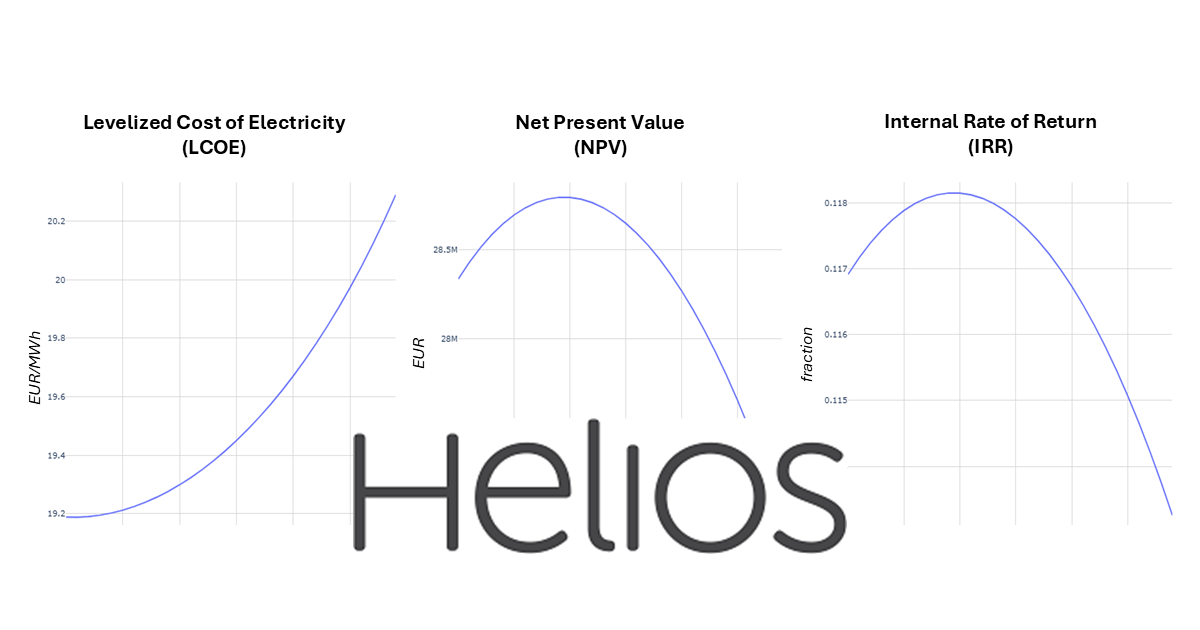
Built for developers who want accuracy and freedom in their designs
Hybrid PV + BESS projects reward teams that explore more options, test assumptions rigorously, and iterate quickly. But most organizations are forced to choose between two extremes: simplified tools that limit design freedom, or complex workflows that slow everything down.
This solution is designed for developers who want both: engineering-grade accuracy and full freedom to design creatively, without being constrained by black-box software, slowed down by manual workflows, or forced to rely on costly external consultants for every iteration.
The challenge: Too many tools, too much manual work
Estimating long-term revenues for hybrid PV + BESS projects requires more than just a PV yield simulation. It requires battery dispatch logic, market price assumptions, grid constraints, and the ability to explore many design variants efficiently.
In practice, teams end up combining spreadsheets, yield software, battery models, and financial calculations, with many manual steps in between. Every design change triggers a chain reaction: re-running models, exporting results, copying values, and rebuilding plots and reports.
This makes iteration slow and fragile. As a result, teams typically evaluate only a small number of design candidates and fall back on general assumptions, even though project value depends heavily on location-specific effects, price curves, and design details.
Building an integrated optimization workflow in Python would solve the problem, but most teams lack the Python experience and time required to build something reliable from scratch. Hiring specialists or relying on consultants is possible, but costly and difficult to scale.
Our solution: Turn internal logic into an automated workflow
PVRADAR provides a Python-based workflow that automates hybrid PV + BESS design and financial evaluation. All key assumptions remain explicit and configurable, including price data sources, dispatch logic, boundary conditions, PV modeling choices, degradation effects, and grid constraints.
The result is a transparent, adaptable, and scalable workflow that removes repetitive manual steps, accelerates iteration across design variants, and increases confidence in the technical and financial decisions made during early-stage development.
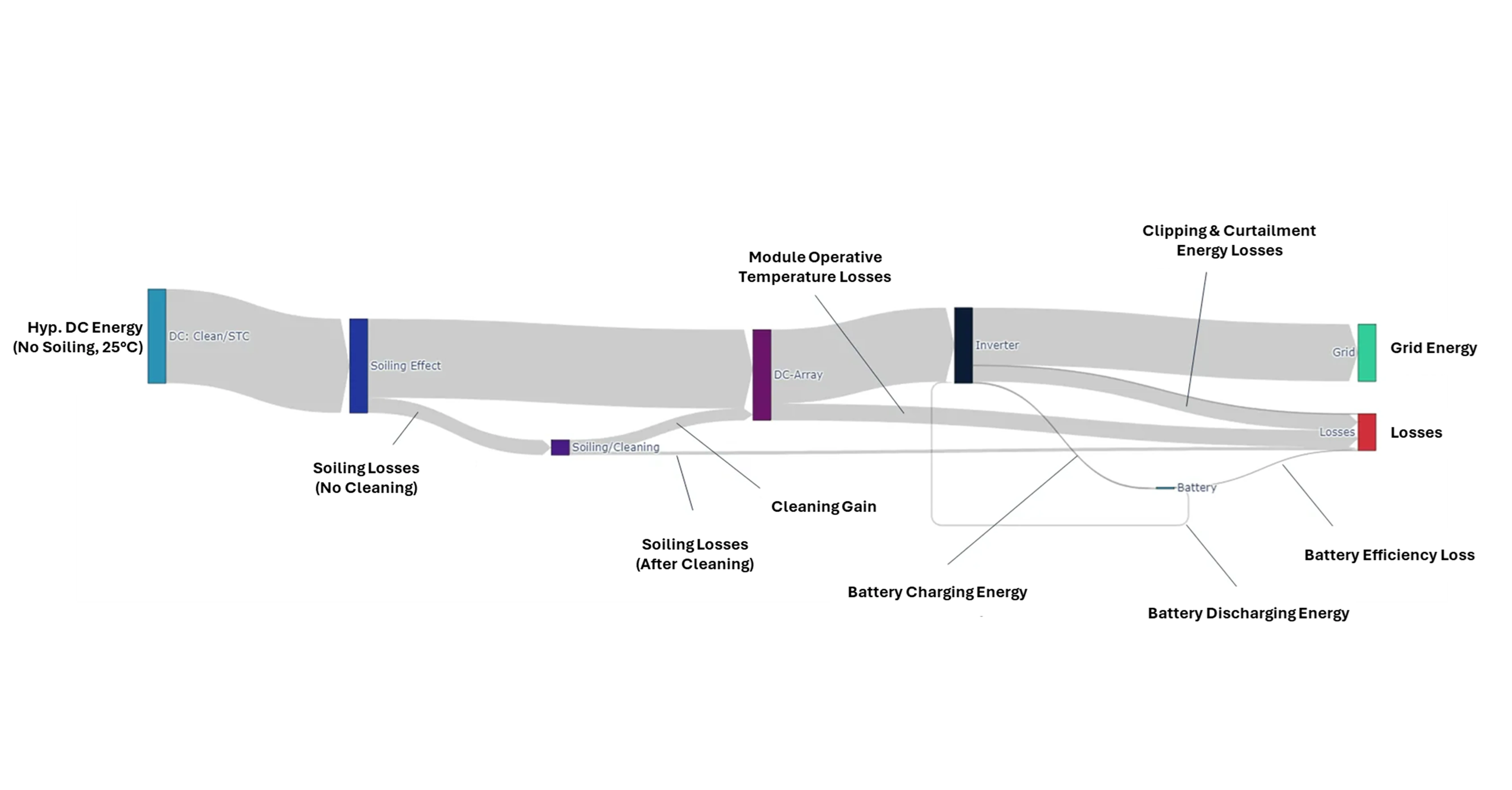
How it works: From boundary conditions to optimal design
1. Define location and constraints
Change the project location and boundary conditions, such as grid limits, maximum capacity, or layout constraints, and execute the workflow.
2. Automatically retrieve all required input data
Historic and expected electricity prices as well as meteorological time series are sourced automatically from preferred providers, whether public or third-party.
3. Model PV yield using pvlib
PV production is estimated using pvlib-based models, allowing physically consistent yield estimation and full transparency over assumptions.
4. Simulate battery behavior and dispatch
Battery operation is simulated using models from the PVRADAR battery library, including dispatch optimization aligned with the project’s revenue strategy.
5. Calculate cashflows and financial KPIs
For each design variant, the workflow computes cashflows and key financial metrics, enabling direct comparison of business outcomes.
6. Explore hundreds of design variants automatically
Simulations are repeated across large numbers of PV and BESS sizing combinations to identify optimal configurations, rather than relying on a handful of manual scenarios.
7. Summarize results clearly
Results are presented through clear, interactive plots that make trade-offs visible and support faster internal decision-making.
What you get: Faster development and better decisions
- Automated PV + BESS sizing and dispatch evaluation for early-stage projects
- Less time spent on repetitive modeling and reporting tasks
- Higher-quality decisions based on industry-accepted models instead of rough assumptions
- Reduced reliance on external consultants and additional specialist hires
- A workflow that can be adapted as your development strategy evolves