Built for asset owners who demand transparency and control
Large asset owners and IPPs operating sizeable PV portfolios face increasing pressure to improve performance and protect revenue, while internal stakeholders demand transparency, traceability, and ownership.
This solution is designed for organizations that want to build advanced performance analytics internally, without vendor lock-in and without sending operational data outside their systems.
The challenge: Plenty of data. Too few answers.
Operating PV portfolios generates vast amounts of data, yet underperformance is still hard to explain and quantify.
Cloud-based asset management platforms typically aggregate data into KPIs but offer limited transparency and flexibility. They provide dashboards, but cannot be adapted to specific needs or particular situation.
Building an internal solution seems like the logical next step. After all, no one understands your assets better than you. In practice, internal data such as SCADA and asset metadata is fragmented and rarely analysis-ready. Turning this data into a robust, scalable performance analytics workflow requires significant effort, even for teams with strong technical expertise.
The result is a familiar situation: plenty of data, but too few answers to confidently explain underperformance and prioritize corrective actions.
Our solution: Build the performance analytics you need.
PVRADAR enables you to create an internal performance analytics solution that is precisely aligned with your data, KPIs, and loss definitions.
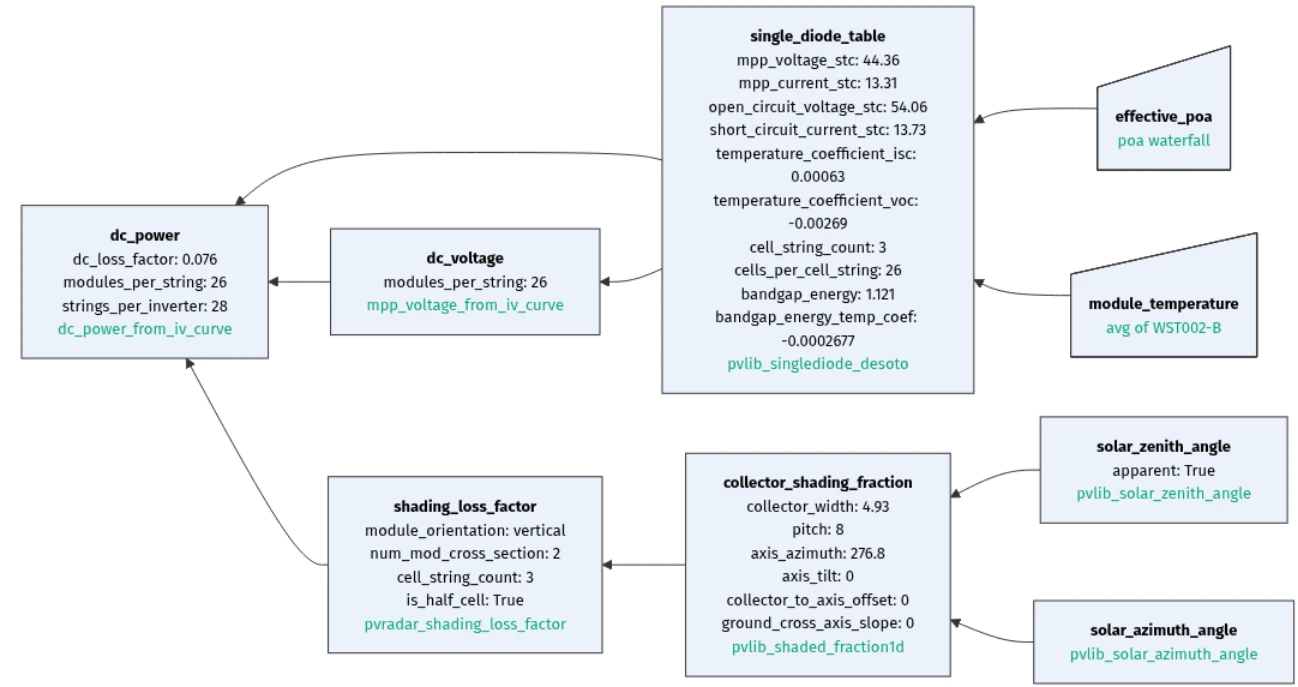
You define how performance is modeled, how deviations are attributed, and how results are reported. Digital twins simulate ideal plant behavior, while custom logic and loss taxonomies reflect your internal view of performance across assets and portfolios.
All computations run locally, ensuring full data privacy.
Every result is fully traceable from raw inputs and parameters to final outputs. Model choices, assumptions, and data sources remain visible and adjustable at any time, allowing your analytics to evolve as your organization’s needs change.
How it works: From digital twins to actionable insights.
1. Model ideal asset behavior
Create digital twins by combining pvlib models with custom logic to simulate the ideal performance of each asset under real-world conditions.
2. Integrate internal data at scale
Connect to your SCADA data and project metadata through a private data layer, hosted by PVRADAR or on-premise, that standardizes, quality-checks, and refreshes datasets automatically.
3. Attribute losses using your definitions
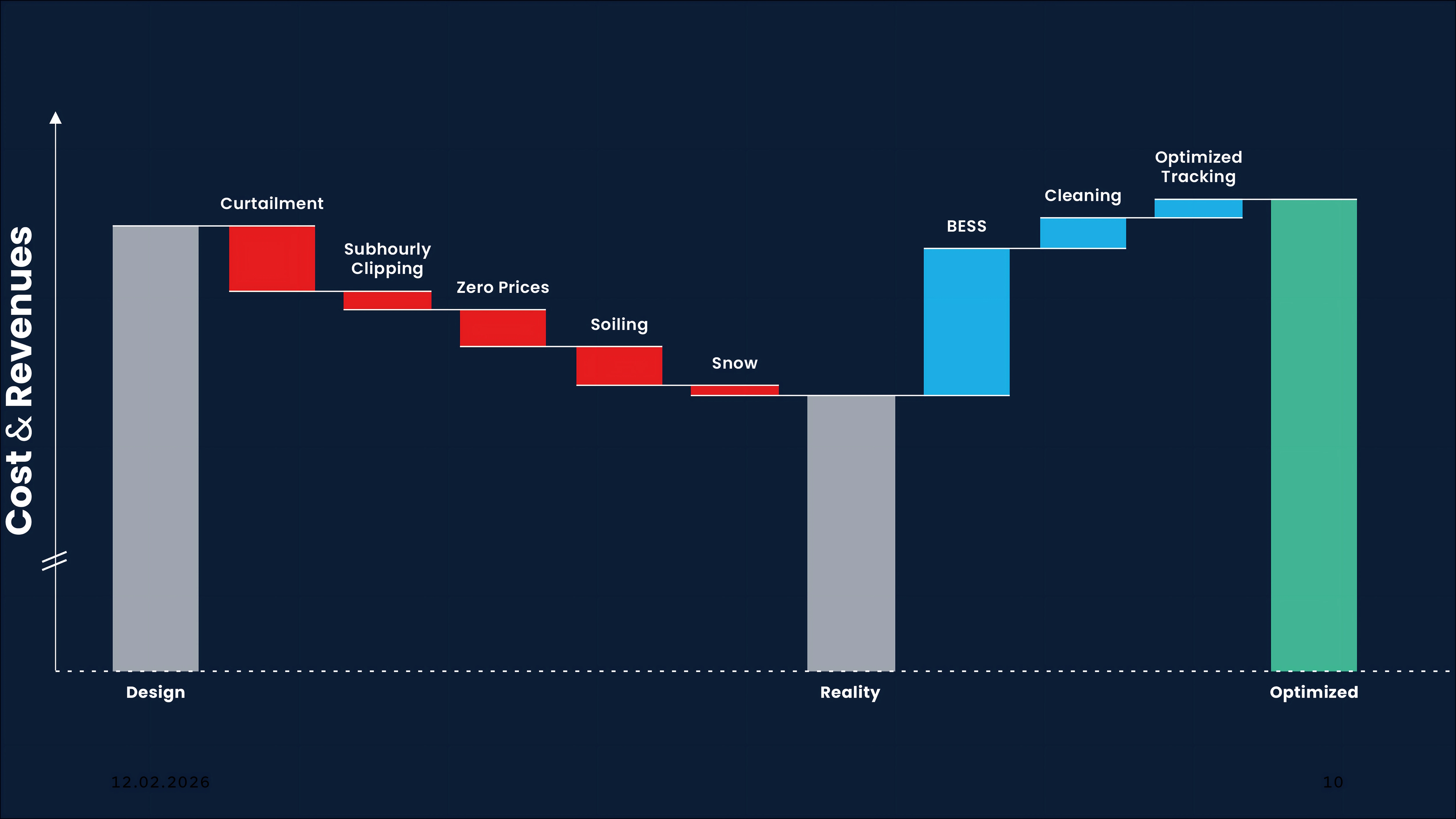
Compare ideal and measured behavior and assign deviations to your internal loss categories, such as availability, curtailment, soiling, clipping, or component outages.
4. Turn results into decision-ready outputs
Generate custom plots, dashboards, and reports that align with your internal KPIs and operational workflows.
5. Execute everything locally
Run all computations within your own environment, ensuring that no operational data ever leaves your system.
What you get: Full control, without compromise.
- High-accuracy quantification of losses and underperformance you can fully explain and defend
- Full ownership of data, models, and performance logic, from inputs to results
- Complete transparency across the entire analysis chain, with all assumptions and model choices visible
- A self-contained solution with no black boxes, no vendor lock-in, and no data leaving your system