
Blog
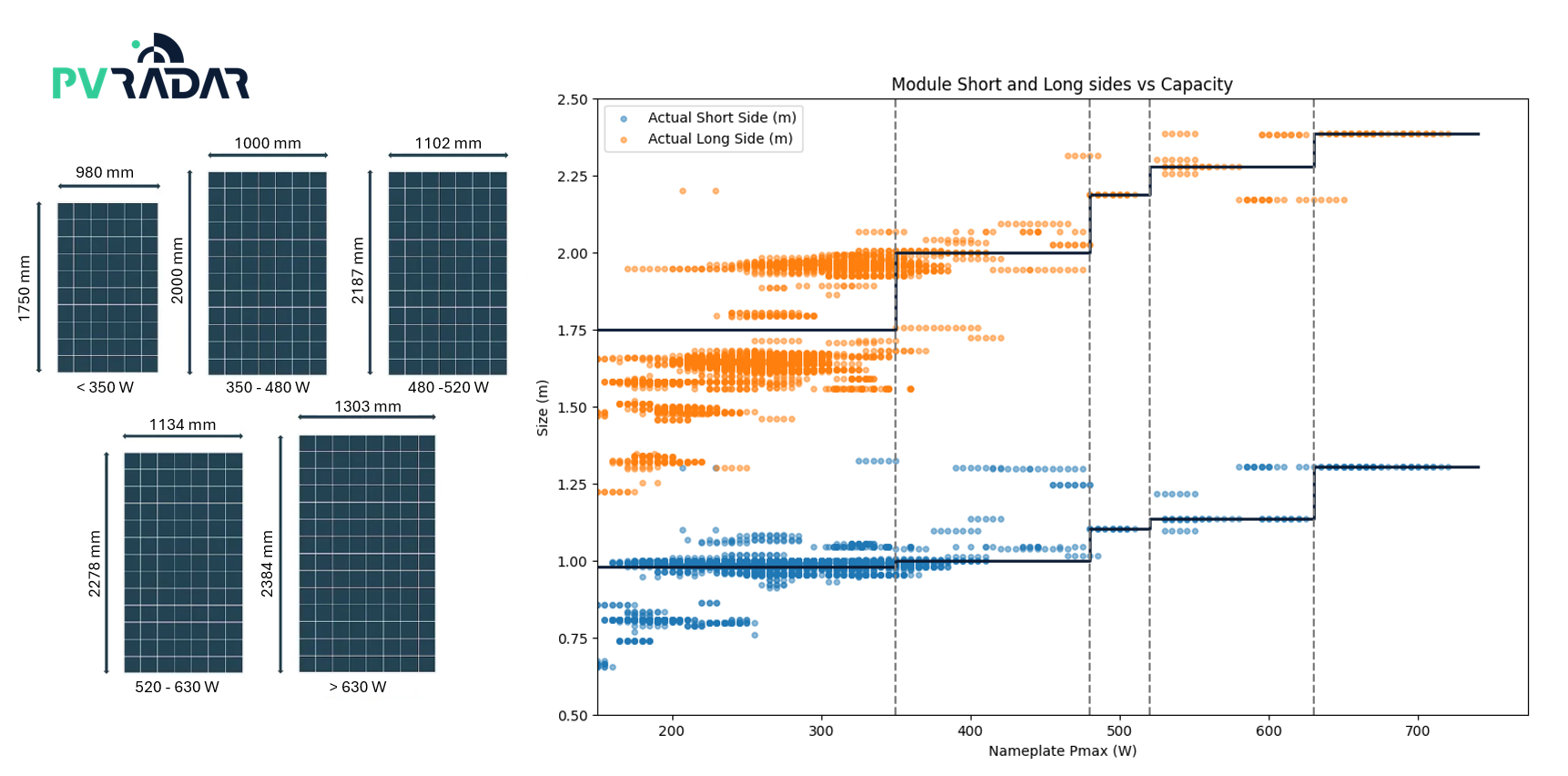
A Practical Solution for PV Module Dimension Variability
The diverse power capacities and dimensions of photovoltaic (PV) modules complicate operational tasks like cleaning and albedo enhancer material estimation. While newer high-capacity modules have seen efforts toward standardization, older models still vary widely in size. Our analysis of over 21,000 modules from the California Energy Commission led to a step function that classifies modules by power capacity, offering practical size estimates. This approach accounts for both older and newer models, providing a simple solution to streamline the analyses of cleaning strategies and high-albedo material use.
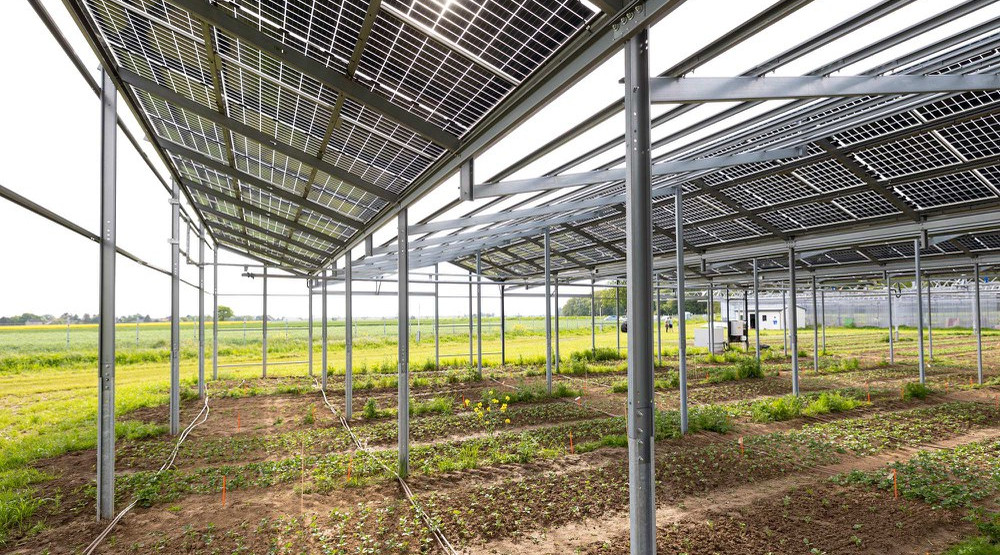
PVRADAR part of Agri-PV research project
PVRADAR Labs, in partnership with Volateq and Forschungszentrum Jülich, has launched the "APV-Monitor" project to optimize agri-photovoltaic (Agri-PV) systems. The project focuses on developing an automated drone-based monitoring solution to improve the efficiency and profitability of Agri-PV operations, integrating cutting-edge data analysis and validation in real-world environments.
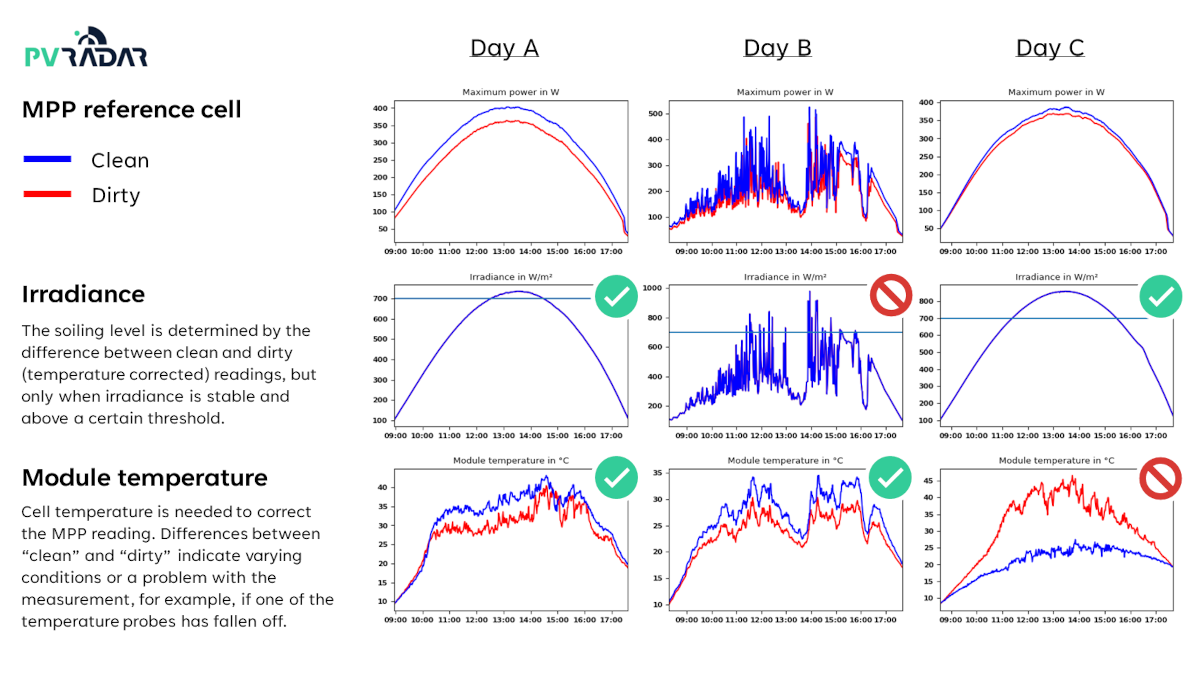
Soiling Measurement Guide Part 2/2: Common issues and how to avoid them
A summary of insights from extensive hands-on experience in soiling measurements and data analysis in the PV industry: addressing common issues and how to avoid them. This article discusses unstable measurement conditions, human error, and environmental influences, providing practical recommendations to ensure accurate and reliable soiling measurements. Topics include sensor placement, regular data review, the importance of measuring both irradiance and cell temperature, and strategies for managing environmental factors like bird droppings and snow.
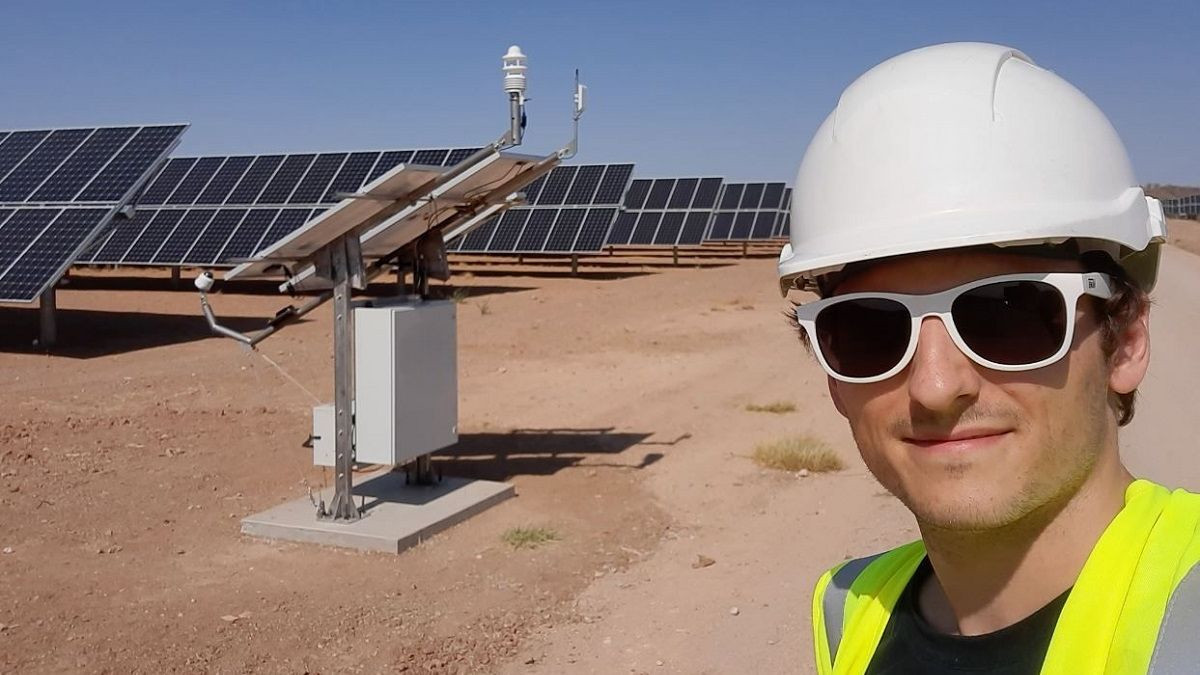
Soiling Measurement Guide Part 1/2: Choosing the right soiling sensor
A summary of insights from over seven years of hands-on experience in soiling measurements and data analysis in the PV industry: how to accurately measure soiling, the trade-offs between accuracy and cost, and the pitfalls of optical sensors compared to electrical sensors. This article provides clear recommendation for the selection of the right measurement principle, balancing cost and accuracy, and optimizing measurement strategies for various applications.
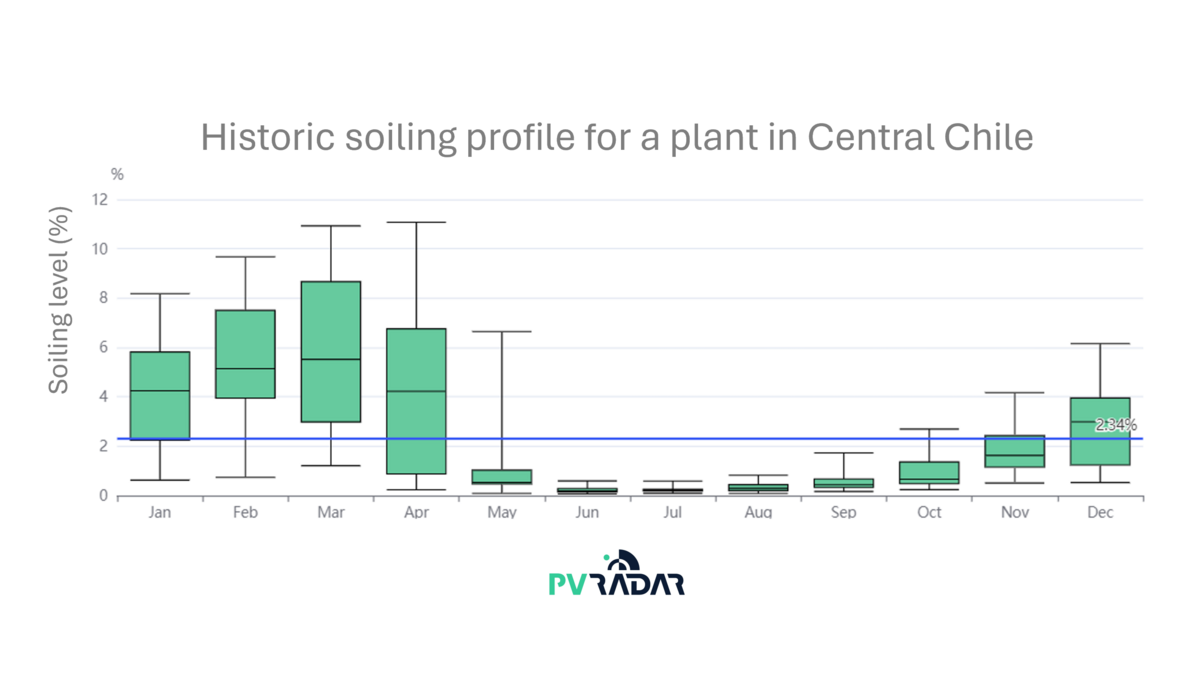
Assuming 2% soiling loss threatens project profitability
Assuming a constant 2% soiling loss in PV project development often leads to revenue miscalculations. This flawed practice, common due to time and resource constraints, fails to reflect actual conditions, especially in high-soiling areas. Even in moderate soiling regions like Central Chile, a plant with soiling averaging 2.3% shows how small discrepancies can hide significant effects, as soiling peaks coincide with periods of maximum production. Accurate soiling assessments are essential for realistic energy yield estimates and ensuring project profitability. Decision-makers should prioritize detailed soiling analysis to secure the financial success of PV projects.
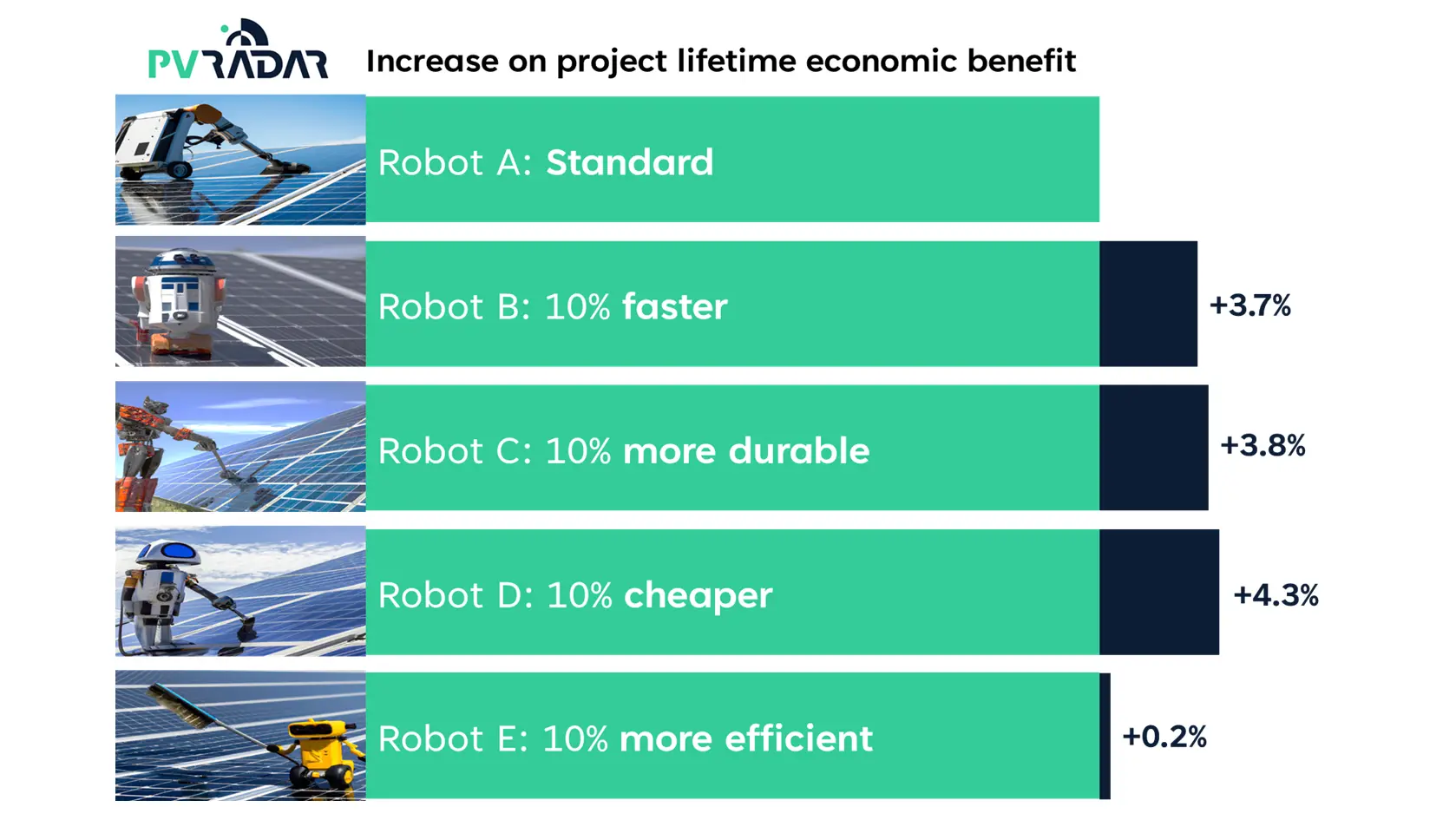
Choose the best fully-autonomous cleaning robot for your project with PVRADAR
How do you select the most cost-effective cleaning robot for your project? In places with heavy soiling, fully autonomous robots are a viable solution to keep soiling losses under control. But which one should you choose from the wide range on the market? The cheapest, fastest, most efficient or the most durable?
Using PVRADAR, we show how five different fully autonomous robotic solutions work in a sample project in Chile.
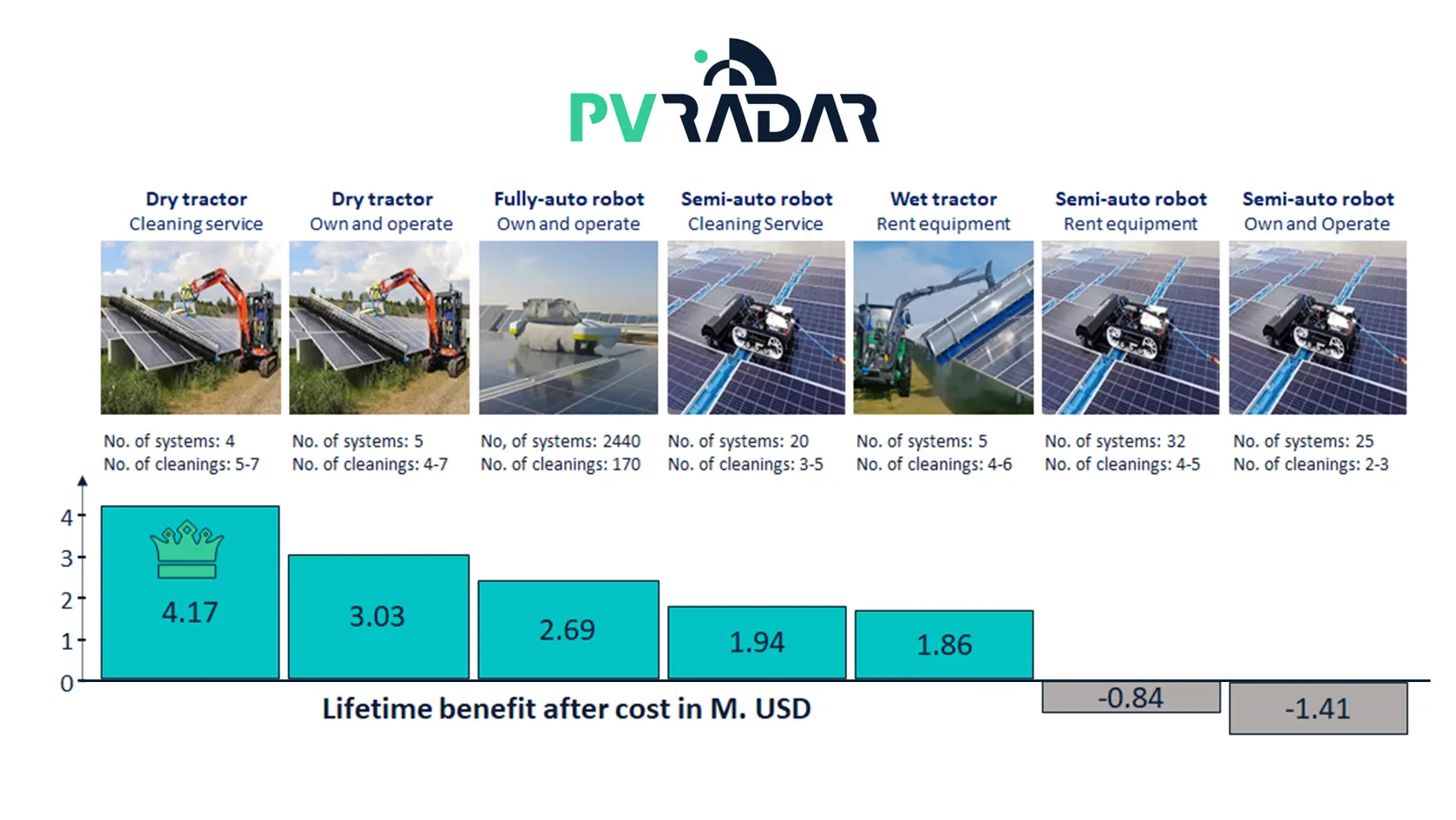
Soiling assessment and cleaning optimization with PVRADAR
The decision on how to clean your PV plant is complex. Not cleaning can result in huge revenue losses, while suboptimal strategies can generate more costs than benefits. In order to find the most cost-effective cleaning strategy, many different scenarios have to be calculated and compared, taking into account all technical details and related costs.
PVRADAR solves this challenge in an easy, fast and accurate way, letting you get the most out of your PV project.